
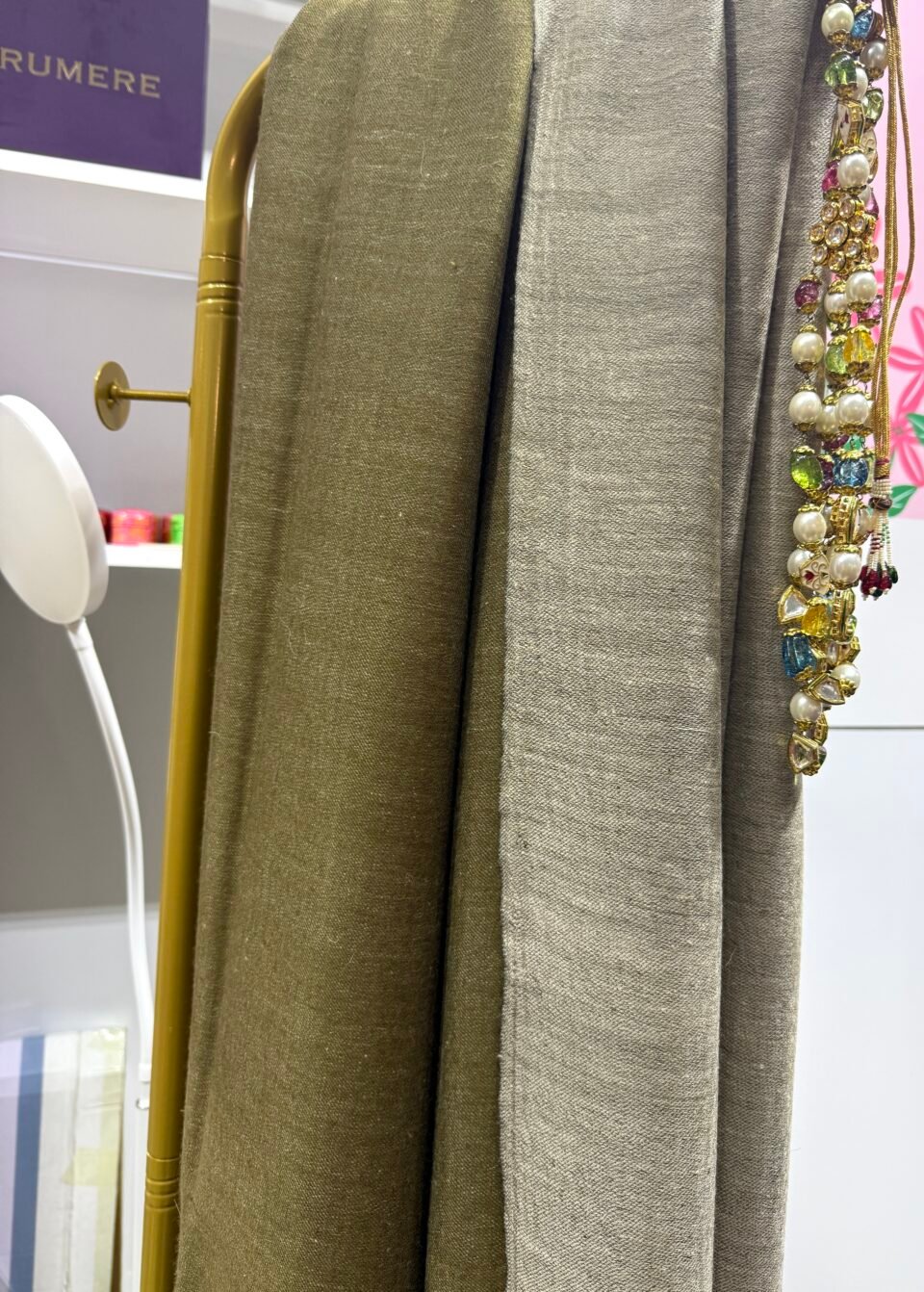
What Makes Cashmere So Special?
Ever wondered how your softest scarf or shawl came to life? The journey of cashmere – from the high-altitude Himalayan goats to the artisan’s loom – is a tale of patience, purity, and craftsmanship. Known as nature’s finest fiber, cashmere blends warmth, softness, and sustainability into every delicate thread.
At Aurumère, each cashmere creation is more than a garment. It’s a tribute to the Himalayan highlands, the herders who nurture the goats, and the skilled artisans who transform raw fibers into timeless pieces of art.
Where Does Cashmere Come From? The Himalayan Origin Story
Cashmere’s story begins in the breathtaking plateaus of Ladakh, home to the rare Changthangi goats. These goats thrive at altitudes above 14,000 feet, enduring freezing Himalayan temperatures that help them grow an incredibly fine undercoat – the source of the world’s most luxurious fiber, Ladakhi cashmere wool.
This natural adaptation results in fibers that are lightweight, soft, warm, and durable.
At Aurumère, we celebrate this Himalayan legacy by sourcing our cashmere responsibly, supporting local herders, and protecting the authenticity of every fiber.
How Is Cashmere Made Step by Step?
The cashmere production process is a labor of love — deeply rooted in tradition and care.
- Combing, Not Shearing:
Each spring, when goats naturally shed their undercoat, herders gently comb the wool. This ethical method collects only the softest fibers without harming the animals. - Cleaning & Dehairing:
The collected wool is cleaned and separated from coarse outer hair, leaving behind the pure, fine undercoat. - Spinning by Hand:
Skilled artisans spin the delicate fibers into yarn — often by hand — ensuring every thread retains its natural softness. - Dyeing & Weaving:
Finally, the yarn is dyed using eco-friendly colors and woven into fabric. At Aurumère, every weave reflects precision, patience, and purpose.
Understanding how cashmere is made helps us appreciate why it’s so rare, valuable, and long-lasting.
How Cashmere Turns into Luxurious Garments
Transforming cashmere from yarn to luxury fashion takes artistry.
At Aurumère, traditional weaving and knitting techniques meet contemporary design, creating shawls, wraps, and scarves that embody elegance and comfort.
Our artisans, often trained across generations, weave stories into every thread. The result? Textiles that perfectly balance warmth, lightness, and timeless beauty.
Each Aurumère creation carries a connection between nature and craftsmanship — a philosophy that defines luxury in its purest form.
What’s the Difference between Pashmina and Cashmere?
Though often used interchangeably, Pashmina vs Cashmere reveals subtle but important differences:
- Pashmina: The finest variety of cashmere, sourced from the Changthangi goat and traditionally handwoven in Kashmir.
- Cashmere: A broader term for luxury wool obtained from goats in high-altitude regions like Ladakh, Tibet, and Mongolia.
At Aurumère, we work closely with Himalayan herders to preserve the purity and authenticity of Ladakhi cashmere wool, ensuring our textiles represent genuine craftsmanship.
Why Authentic Cashmere Is worth the Investment
It takes fibers from several goats just to make one cashmere shawl – and every step, from combing to weaving, is done by hand. That’s why authentic cashmere is both exclusive and enduring.
Owning an Aurumère cashmere piece is like carrying a part of the Himalayas with you – soft as a whisper, warm as tradition, and timeless as elegance itself.
Quick Summary: The Cashmere Journey at a Glance
Origin: Himalayan highlands (Ladakh, Tibet)
Source: Changthangi goats’ fine undercoat
Process: Ethical combing → Cleaning → Spinning → Weaving
Result: Luxurious, soft, sustainable fabric crafted by artisans
Popular Searches
Aurumere’s Exclusive Pashmina Collection | Stoles | Shawls | Embroidered | Limited edition | All Products.
FAQs
1. What is Cashmere and where does it come from?
Cashmere is a fine, soft fiber from the undercoat of Himalayan goats, especially the Changthangi breed native to Ladakh and Tibet.
2. How is Cashmere different from regular wool?
Cashmere fibers are much finer and softer than regular wool, offering superior warmth, lightness, and comfort.
3. How is Cashmere collected from goats?
Herders ethically collect cashmere by gently combing goats during their natural molting season – no shearing or harm involved.
4. What are the stages in the Cashmere journey from goat to garment?
The stages include combing, cleaning, dehairing, spinning, dyeing, and weaving by hand.
5. Why is authentic Cashmere expensive?
Producing one shawl requires fibers from multiple goats, and the entire process is handmade, making it rare and valuable.
6. How do you care for Cashmere garments?
Wash gently in cold water with mild detergent, and always store folded to maintain softness and shape.